
Research & Creation Journal
Reflections on my artistic practice — a space of thought in motion, not a fixed record.
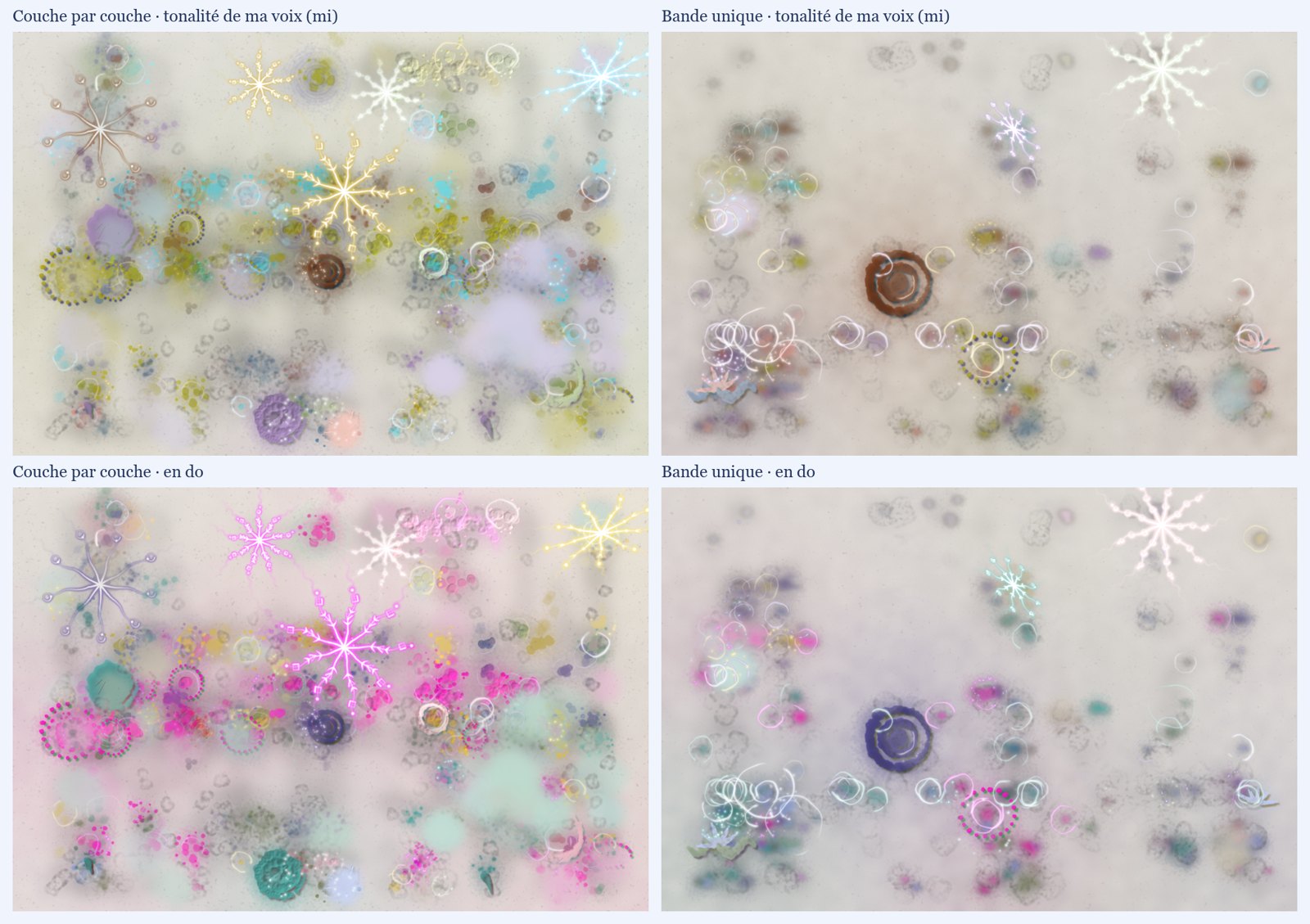
Layer by layer, or a single band: each voice must exist
My three voices each paint their own layer; what if I were to blend them into a single band before painting? The paint then dissolves into a pale veil: when the voices merge, the time, space and gesture of each fade away.
November 16, 2026
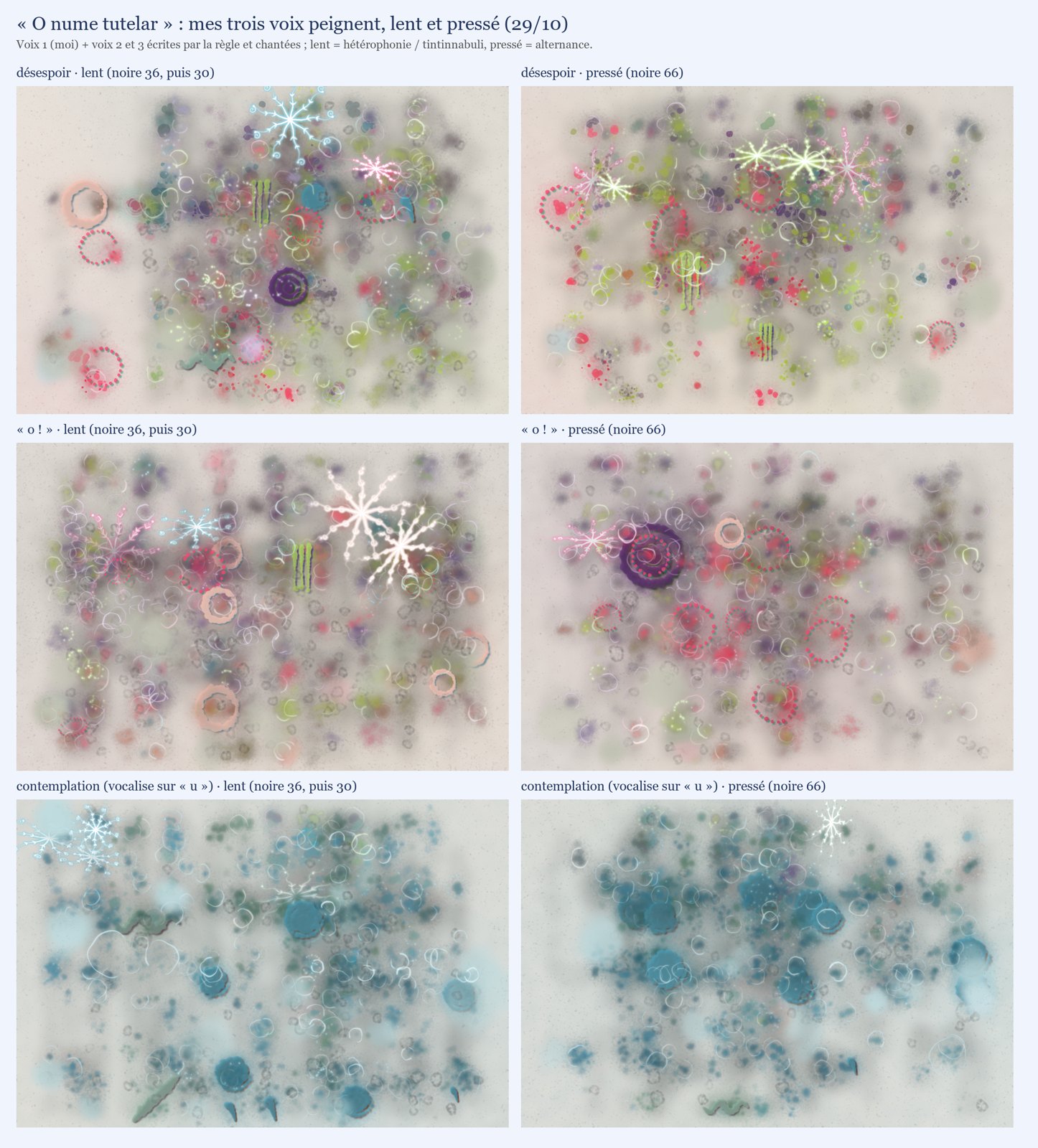
My three voices, slow and hurried: speed changes the texture
The same versions of ‘O nume tutelar’, this time for three voices, each sung and painted separately: at a slow tempo, the voices respond to one another; at a brisk tempo, they alternate, and the canvas reflects this.
November 7, 2026
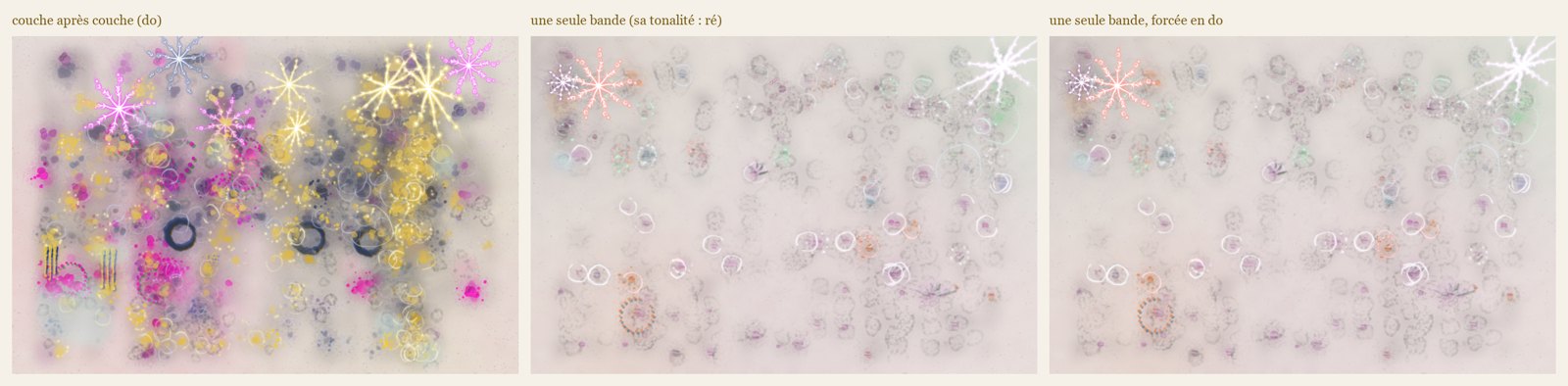
In D or C: it’s not about the key, it’s about the fusion
The single-band painting had taken on a different key to that of the three-layer version (D rather than C). To find out whether it was the key that made it look so pale, I repainted it in C: it remains almost identical.
November 7, 2026
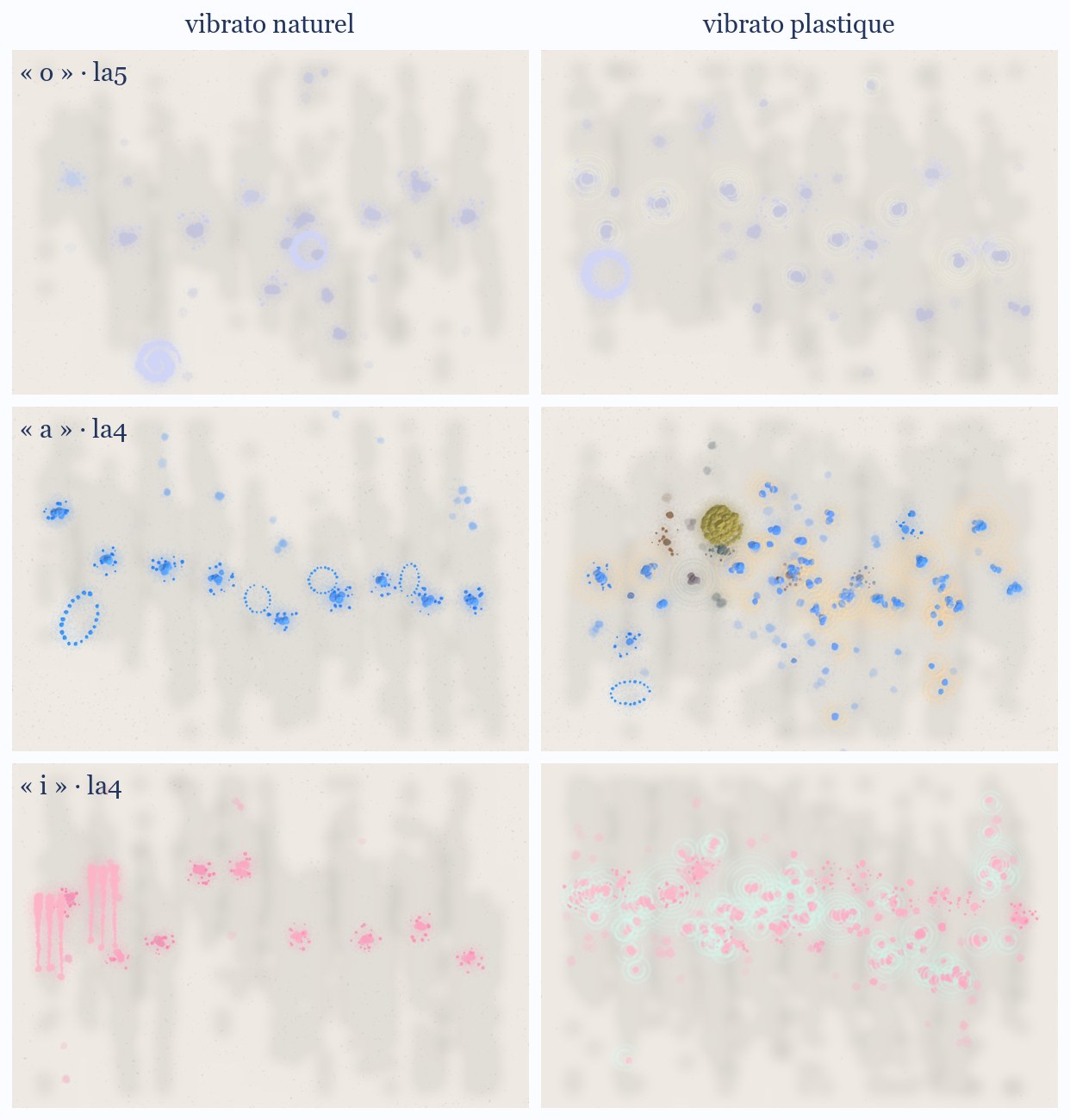
My vibrato, natural or plastic: ripples on the water
The same note, the same vowel, with the vibrato that comes naturally, then the broad, deliberate vibrato. In painting, the vibrato becomes ripples in the water: their rings are the oscillations, their spacing the width, their regularity the consistency.
November 7, 2026
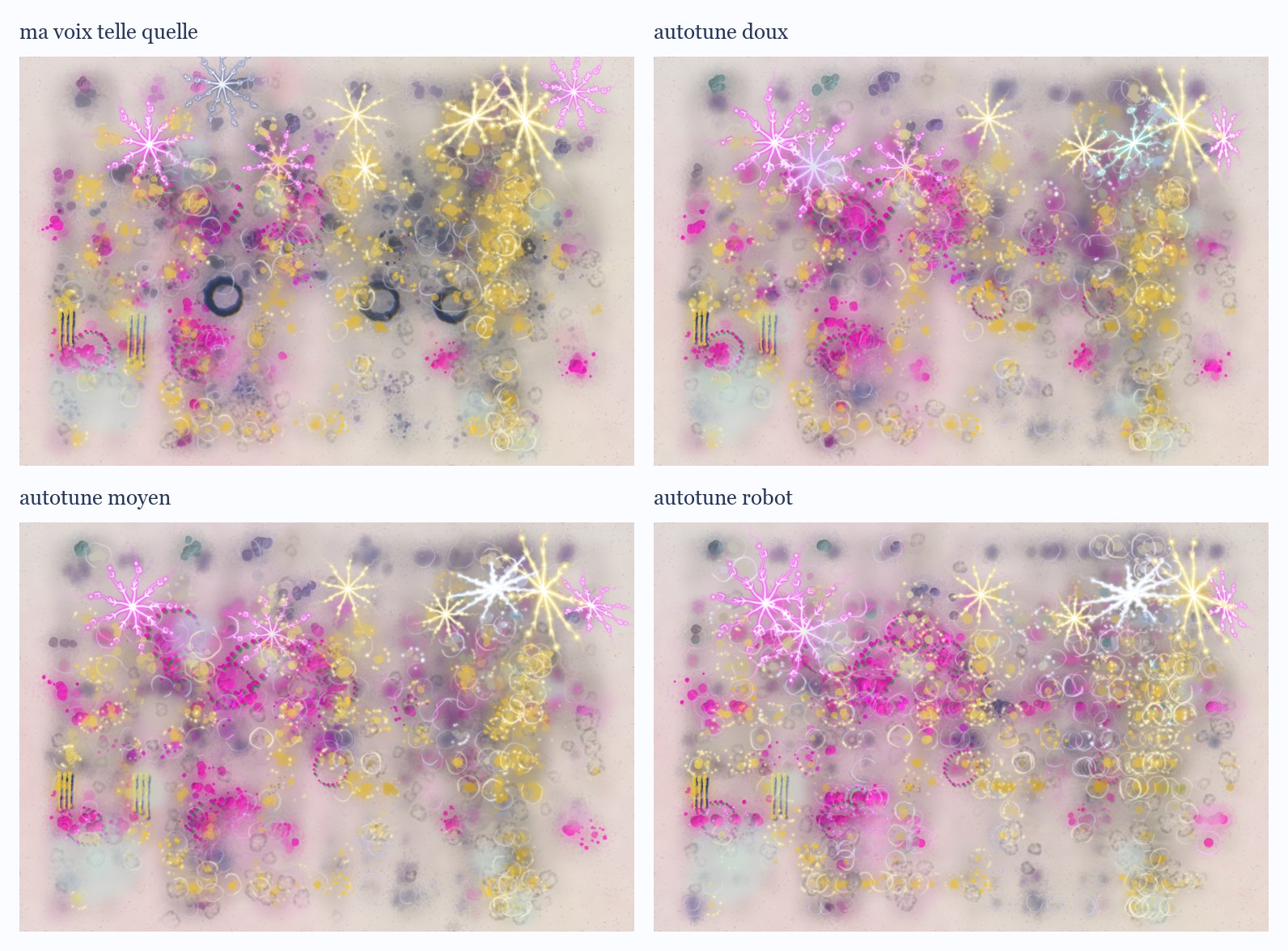
Autotune: what it might cost my voice, its painting and its sculpture
I processed three of Concone’s lessons using Autotune, in ‘soft’, ‘medium’ and then ‘robot’ modes, and let the tool paint them. As the pitch is corrected, the vibrato disappears, the vowel shifts, and the canvas loses its ripples.
November 7, 2026
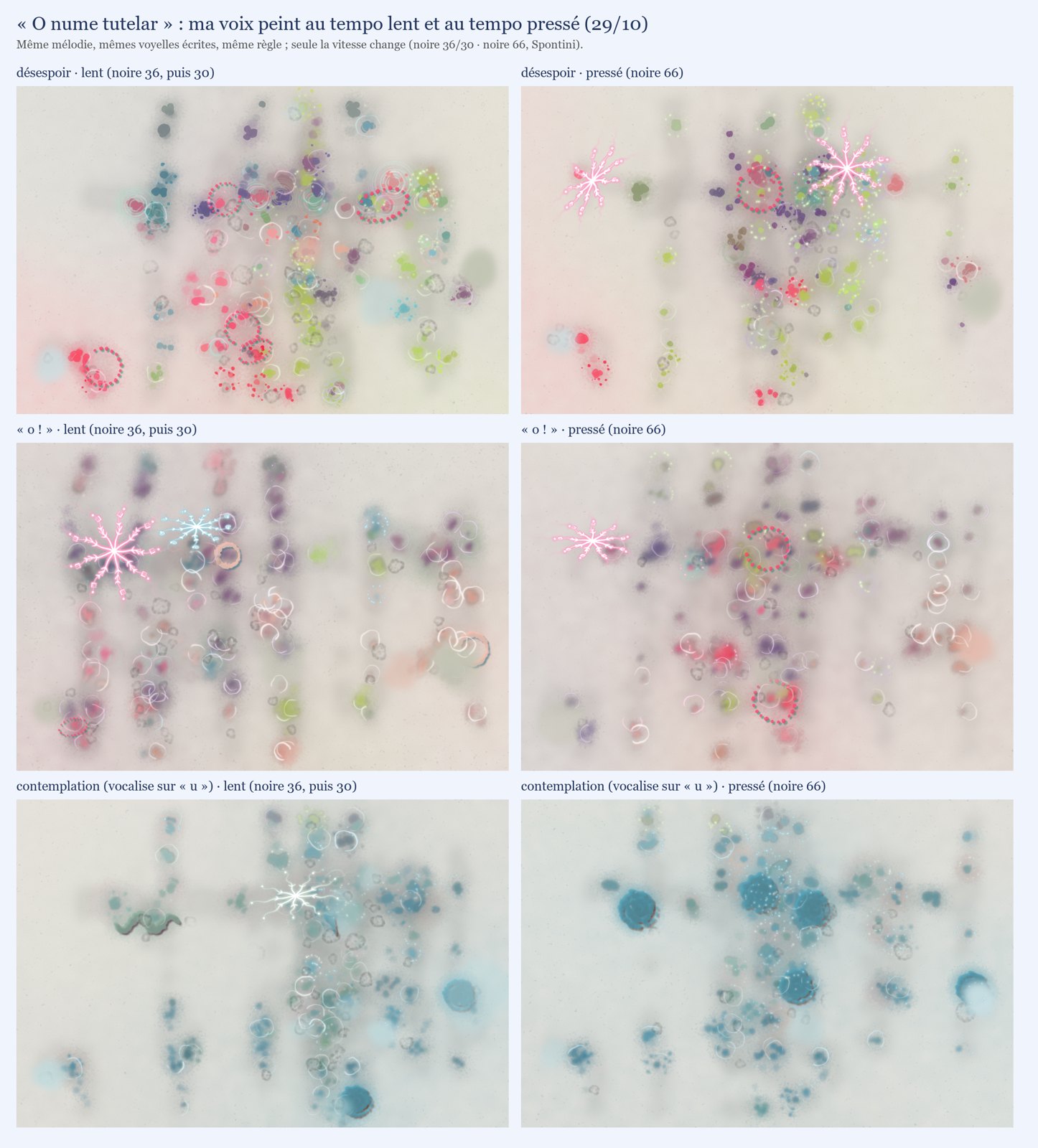
Despair wants to be hurried: tempo is part of the tone
Same melody, same written vowels, same rule: by singing ‘O nume tutelar’ slowly, then at Spontini’s brisk tempo, I discovered that the speed changes the tone, and the painting along with it.
November 7, 2026
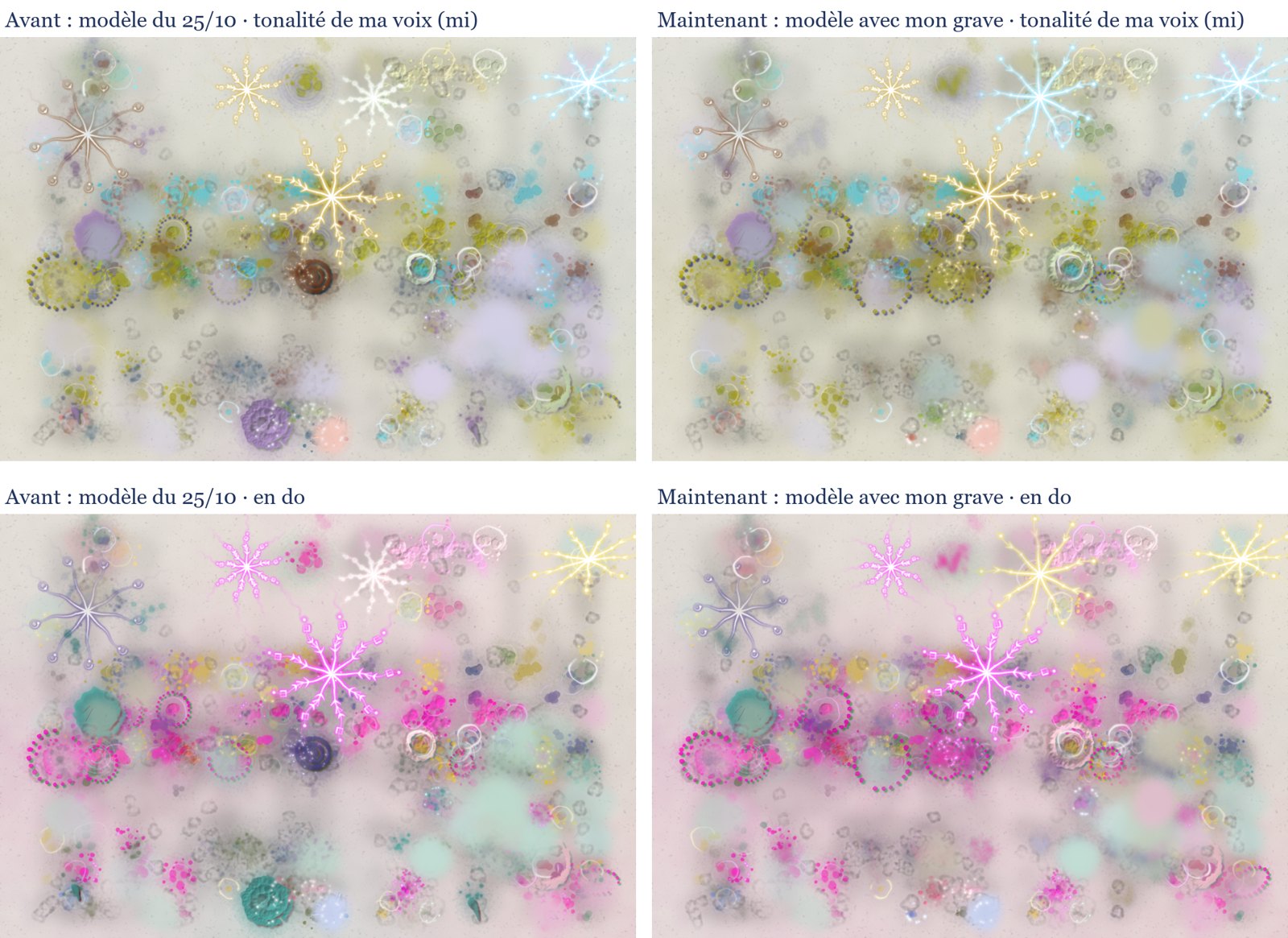
Teaching the tool my low register: Étude a, before and after
The tool that paints my voice was almost completely unfamiliar with my lower register: it had learnt my vowels in the mid and high registers. I sang scales and sustained notes in the lower register so that it could learn them; the ‘Étude a’, repainted, shows what has changed.
November 7, 2026
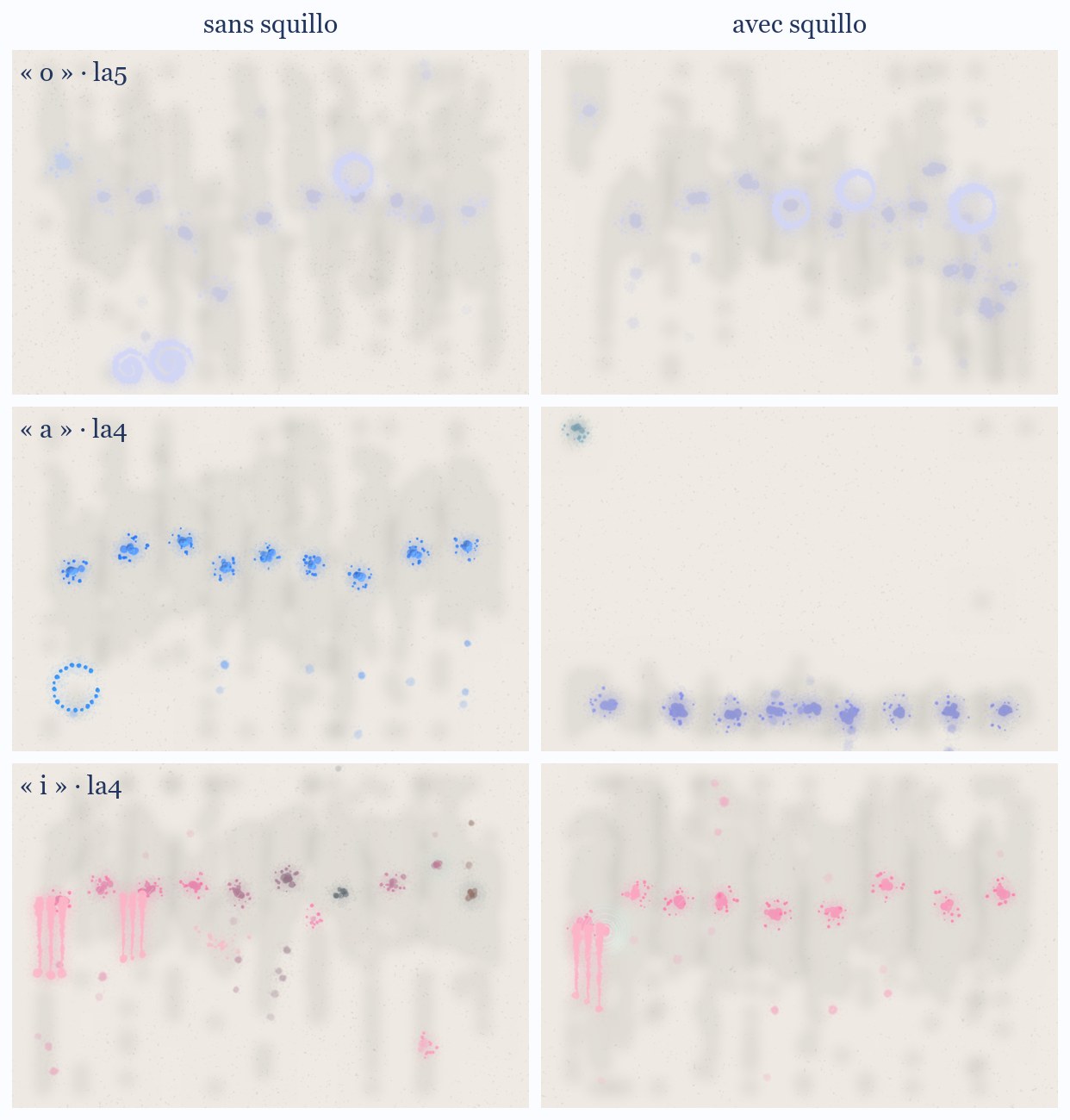
The squillo: the ring of my voice, painted
The same note, the same vowel, sung first in a straight tone, then with the ‘squillo’ – that ringing quality that carries the voice in opera. I wanted to know what the tool hears, and what the painting captures: a thread of light for ‘a’, ‘o’ and ‘ou’, flashes for ‘i’.
November 7, 2026
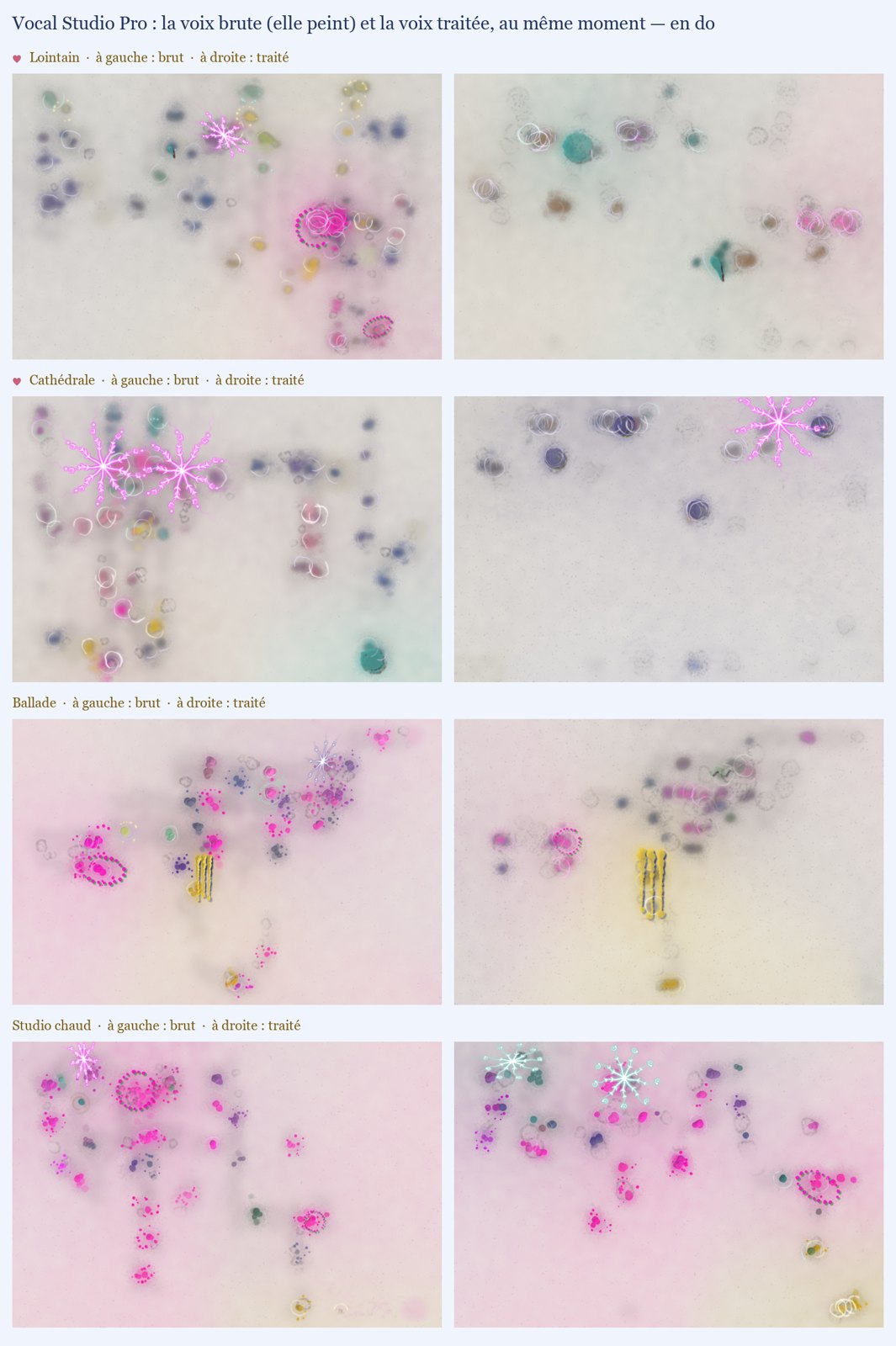
My raw voice paints; my studio voice is something to listen to
I painted the same take twice: once using my raw voice, and once using my voice as processed in the studio (reverb, compression, equaliser). The two canvases are different: that is why the raw voice paints, and the studio voice is the one we listen to.
November 7, 2026